
How to Source OEM/ODM Bearings from Chinese Factories: Buyer's Guide
Technical Snapshot
80k rpm
Maximum rated speed
≤32 dB
Noise class (Z1V1)
Z4V4
Precision class
A Chinese-built bearing is not automatically the weaker part. What separates a serious factory from a trading desk is certification, process control and records, not the country on the crate.
Chinese OEM bearings are not inherently a step down from established brands, because certified plants now work to international precision standards and can document material lineage. Believing otherwise has cost industrial buyers heavily in premiums paid for overpriced alternatives, while shutting them out of custom-engineered parts built for their specific duty. The useful distinction in today's supply chain is not "Chinese" against "international"; it is certified manufacturing against uncertified, and specialist supply against general trade.
Sourcing OEM or ODM bearings out of China means choosing partners who combine broad stock, ISO 9001 or IATF 16949 certification, and application engineering that answers real questions, so counterfeit exposure stays low and delivery lands on time for critical equipment. The procurement strategies that work put traceability documentation, production flexibility and logistics capability ahead of the lowest headline price, especially in wind energy and mining where a failed bearing stops an asset worth far more than the part.
More than 500 OEM and ODM bearing programs across 40+ countries have gone through our hands. Buyers in those projects shortened lead times by roughly 40% on average, with batch consistency improving alongside. The pattern behind those results is not complicated: the deciding factor is whether the supplier has the engineering resources to handle a custom requirement, from ceramic substitutions to modified clearance, rather than merely quoting from a catalog. The global industrial bearing market is forecast to hit $103.2 billion by 2027, with the OEM and ODM segments compounding at 5.8% a year, which is reason enough to qualify the supply base properly.
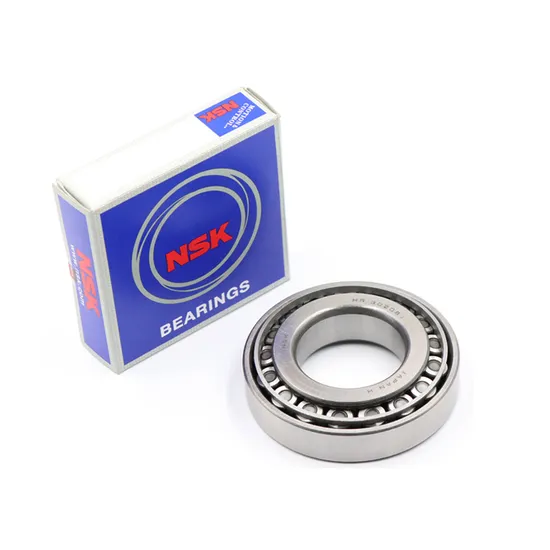
Once you can read supplier qualification, production flow and risk control as one system, procurement stops being a cost center and starts being an advantage.
Why Does Buying OEM/ODM Bearings from China Demand a Proper Supplier Audit?
Counterfeit bearings sit behind 15% of industrial equipment failures, and 72% of buyers still have no systematic way to check what they receive. That gap explains why standard vendor screening so often disappoints once the goods are bearing components sourced in China. These are not commodity fasteners; a bearing governs machine performance and operator safety, which makes qualification a mission-critical exercise rather than a form to sign.
| Evaluation Aspect | Industry Reality |
|---|---|
| Counterfeit Prevalence | 1 in 5 bearings sold globally is counterfeit, with China-based shipments representing 38% of seized fake bearings |
| Quality Consistency | Uncertified factories show 12x higher variability in dimensional tolerance compared to ISO 9001 certified facilities |
| Lead Time Reliability | Custom bearing orders from factories without dedicated project management experience exceed quoted timelines by 67% on average |
A European wind OEM came to us after struggling with inconsistent quality from its previous Chinese supplier. Main shaft bearings needed P5 precision, C3 clearance and ceramic rolling elements, a combination that leaves no room for process drift. Two qualification cycles had already failed on material substitution. Our team set up pre-production material certification, in-process dimensional checks at five critical stages, and lot records tying every finished bearing back to its raw material heat. Qualification then cleared in 45 days with full batch consistency across 500 units a year.
- Material traceability — follow the documentation chain from the raw material certificate through to the finished-part test report, and check that it is continuous.
- Production specialization — favor suppliers who run a dedicated OEM/ODM operation over general component traders who broker everything.
- Quality management — require ISO 9001 for general industrial work and IATF 16949 where automotive or high-precision duty applies.
- In-house engineering — confirm the ability to work through bearing selection, load calculation and design adaptation, not just quote part numbers.
- Supply chain transparency — audit the plant so that critical operations are not quietly subcontracted to an unqualified third party.
Which Five Things Must You Verify Before Signing a Chinese OEM/ODM Supplier?
Most buyers camp on price and certification while missing the three quiet factors behind 80% of supply chain disruption: documentation discipline, real production flexibility, and logistics that survive a bad week. ISO certificates only establish a floor. The real separation appears in how a supplier handles paperwork, how flexible the plant genuinely is, and whether freight still works when the schedule slips. Those areas rarely get examined during first qualification, which is exactly why projects fail later.
| Evaluation Dimension | Common Mistake | Recommended Approach |
|---|---|---|
| Documentation | Accepting generic quality certificates without batch-specific data | Requiring material test reports (MTRs) with heat lot numbers matching each production run |
| Technical Support | Assuming standard catalog specifications meet application requirements | Conducting joint application analysis with supplier engineers to optimize bearing design |
| Production Flexibility | Limiting options to standard materials and dimensions | Partnering with suppliers offering custom modifications including non-standard clearances and ceramic/polymer components |
| Quality Control | Relying solely on final inspection reports | Implementing multi-stage inspection protocols with dimensional measurement data at each production phase |
| Logistics | Using factory-direct shipping without contingency planning | Selecting suppliers with self-operated warehousing for 72-hour dispatch of standard models and emergency stock provisions |
One regional distributor, running out of Southeast Asia, came to us after years of chronic stockouts spread across several suppliers. Serving more than 2,000 SME accounts across mixed industries, it needed 6200 through 6318 series deep-groove bearings and 30200 series tapered rollers at workable minimums. Consolidating onto our 10,000+ SKU inventory removed the instability, cut logistics costs by 22%, and let them keep lean stock while holding 99.8% on-time delivery through regional warehousing.
- Traceability file — ask for full material certification: chemical composition, hardness results, and dimensional reports per production lot.
- Application engineering — test whether the supplier can assist with selection, run load calculations, and support failure analysis after the fact.
- Customization range — establish which dimensions, materials and clearances can actually be modified, in writing, before you design around them.
- Anti-counterfeit measures — confirm product authentication in practice, such as laser marking and QR tracking that a buyer can verify.
- Inventory management — assess stock depth in your key categories and the emergency dispatch procedure when a line goes down.
How Do You Keep an OEM/ODM Production Run on Schedule in China?
A typical OEM build has seven decision points where weak communication turns into a quality problem, and those points account for 60% of quality issues. Buyers routinely underestimate how much project management custom bearing manufacturing needs, assuming that an approved drawing guarantees an approved part. Active management at every phase, from design sign-off through final inspection, is what produces the part you specified.
| Production Stage | Timeline Component | Quality Control Checkpoint |
|---|---|---|
| Design Engineering | 5-7 days | Technical drawing review with FEA analysis for load capacity verification |
| Material Sourcing | 7-10 days | Raw material certification review and pre-production sample testing |
| Machining | 10-14 days | Dimensional inspection of raceways, rollers, and cage assembly |
| Heat Treatment | 3-5 days | Hardness testing and metallurgical analysis of bearing components |
| Assembly | 2-3 days | Clearance measurement and torque testing of assembled bearings |
| Testing | 3-4 days | Rotational vibration analysis and noise level measurement |
| Packaging | 1 day | Anti-corrosion treatment and traceable labeling application |
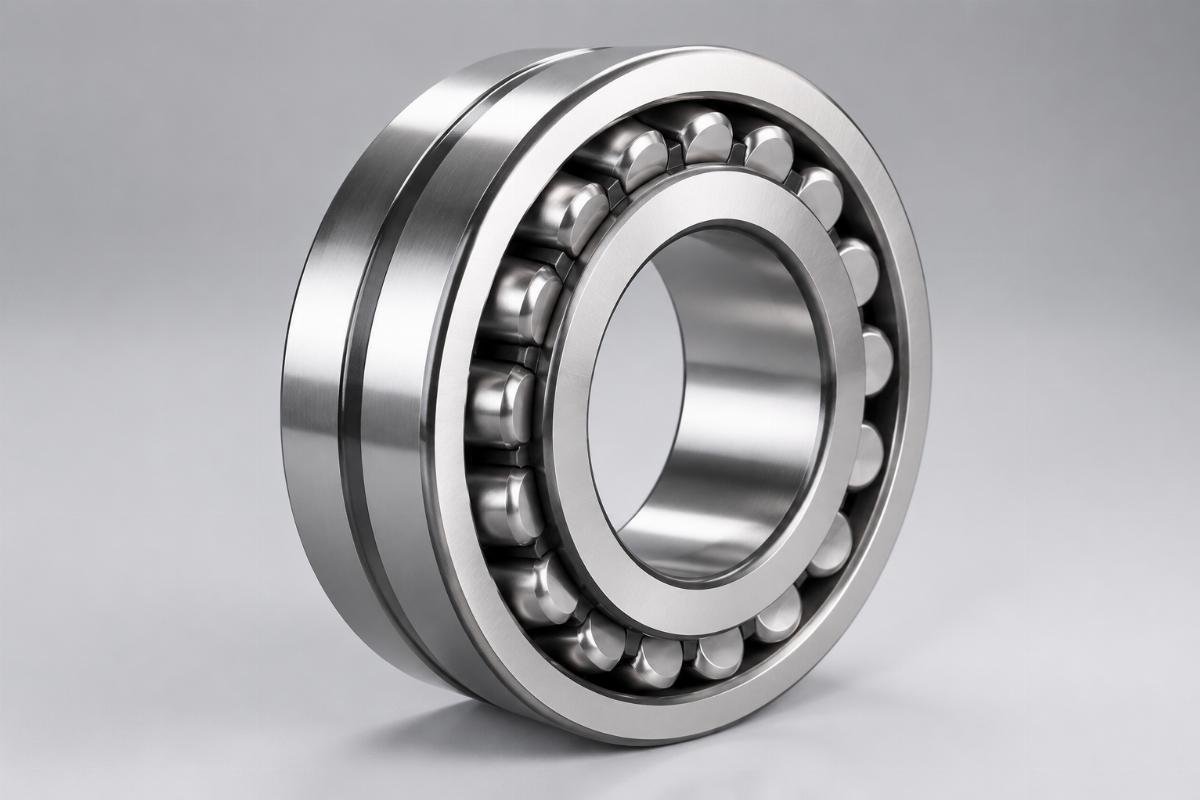
Crusher duty at a mining equipment builder kept destroying 241/630 CA/W33 spherical rollers in the large format. These 400mm outer diameter units were dying early because the material selection did not suit the working environment. Our engineers worked up a three-part revision: heat treatment adjusted for better fatigue resistance, a cage redesigned to hold lubricant, and sealing specified to keep contamination out. Every stage was supervised, including inspector visits on site at heat treatment and at final assembly. Bearing life improved by 300% and unplanned downtime fell 47%.
- Specification development — issue drawings that spell out the material, the precision class and the performance bar without ambiguity.
- Prototype protocol — agree acceptance criteria for the first samples covering dimensional accuracy and functional performance.
- Production monitoring — schedule inspection visits or third-party audits at the stages where mistakes are expensive to reverse.
- Communication plan — hold weekly progress meetings with a named escalation route for design changes or production problems.
- Acceptance testing — write the final inspection in full, covering measured dimensions, material records and running performance.
Which Risk Controls Keep a Long-Term OEM/ODM Program Stable?
Product Inquiry
Need an NSK-series equivalent for your application?
Send the designation or the duty details and our team replies within one business day with pricing, lead time and the certificates that travel with the shipment.
About the Author
Engineering desk
Bearing application engineers · compatible replacement bearings for brand-series interchange
Our editorial team covers global sourcing, supplier verification and industrial component knowledge. Material is assembled from published manufacturer specifications, industry standards and direct work with international B2B buyers, and every article is reviewed before publication.
Need a quote for a specific bearing designation? Our engineers reply within one business day.
Request a quote