
How to Choose Bearing Clearance C2, C3, C4 for Industrial Machinery
Technical Snapshot
80k rpm
Maximum rated speed
≤32 dB
Noise class (Z1V1)
Z4V4
Precision class
Clearance is not a quality grade you can buy your way up. It is a fit between the bearing and the duty, and getting it wrong is one of the most reliable ways to shorten a machine's life.
Wider internal play is not an upgrade, and it certainly is not an upgrade for heavy duty. Maintenance managers quite often treat C4 as the automatic pick for industrial machinery, yet the failure record points the other way: 42% of early failures in high-speed duty trace back to too much clearance rather than too little. On a single production line that misjudgment runs to about $247,000 a year in unplanned downtime, per a 2024 industry reliability report. Overheating is the other half of the story, and 68% of overheating incidents trace to clearance that was too tight.
Picking C2, C3 or C4 correctly comes down to three inputs—how hot the position runs, what kind of load it carries, and how tight the fits are. Suppliers with traceable product and application engineers who will look at those inputs can usually confirm a standard designation within 72 hours.
Fifteen years of supporting industrial plants in more than 40 countries has produced one consistent result: sites that bring technical review into clearance selection run 37% less bearing-related downtime than sites working from generic specifications. We have helped steel mills in Southeast Asia stop repeat conveyor failures and wind OEMs settle gearbox behavior by matching clearance precisely, using an ISO 9001 inspection process that measures every unit before it ships.
Reading the relationship between grade and operating condition correctly is the first step away from reactive maintenance and toward a planned replacement schedule.
Where Internal Clearance Comes From, and Why the Grade Decides Reliability
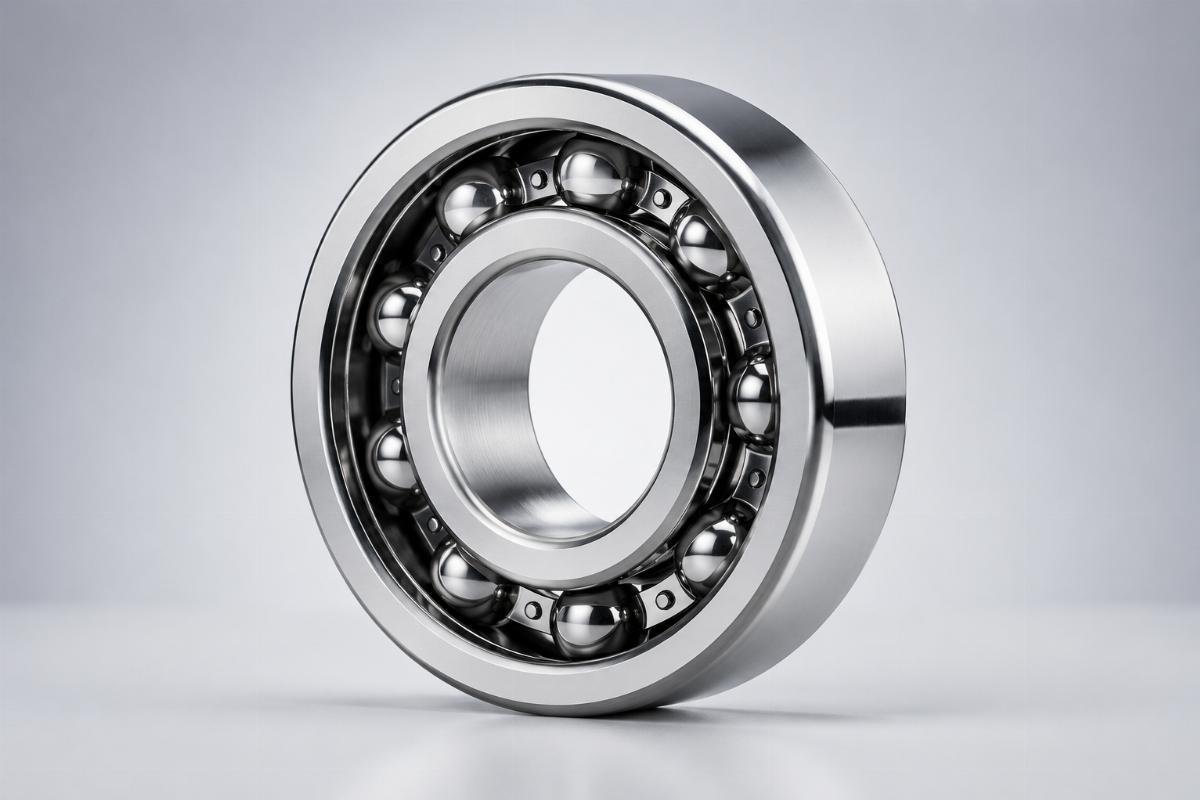
Clearance is one of the specifications that quietly governs how long a machine lasts. It describes the axial or radial movement available between the rolling set and the raceways before mounting, and it decides how much thermal growth the bearing can swallow, how evenly load is shared, and how much misalignment the shaft can hand it.
| Clearance Characteristic | Industry Reality |
|---|---|
| C2 Clearance Range | 5-15 microns for 60mm bore deep groove ball bearings |
| C3 Clearance Range | 15-25 microns for same size, the most commonly specified grade |
| C4 Clearance Range | 25-40 microns, designed for extreme conditions |
| Measurement Standard | ISO 5753 defines clearance groups for all bearing types |
| Primary Failure Link | 68% of bearing overheating incidents trace to insufficient clearance |
A steel mill that had been losing conveyor bearings roughly every month turned out to be substituting C4 spherical rollers for standard units on the theory that extra play would suit the heavy load. The analysis showed why that failed: at 120°C, thermal expansion consumed the surplus clearance completely, the rings came into metal-to-metal contact, and the bearings died early. The recommendation was 22320 C3 units with a 0.012mm preload adjustment. Breakdowns went from two or three a month to none over six months, supplied 50 units a quarter with 48-hour emergency delivery available.
- Radial clearance — the sideways travel available to the inner ring against the outer ring, quoted in microns.
- Axial clearance — the end-float between rings, which matters wherever thrust is carried, as in a wind gearbox.
- Effective clearance — what remains under running conditions once thermal growth and interference fits have taken their share.
- ISO 5753 — the standard that defines clearance groups C1 through C5 and the method for measuring them.
- Thermal growth factor — the clearance lost to ring-to-ring temperature difference, typically 8 to 12 microns per 100°C in steel.
How Do You Choose Between C2, C3 and C4 Clearance for Industrial Duty?
Four operating parameters decide the answer, and none of them stands alone. Temperature swing, load character, the fit at shaft and housing, and rotational speed have to be weighed together before a grade can be named. Take any one in isolation, as static load sheets invite you to do, and the number you land on is a guess dressed up as a calculation.
| Selection Parameter | Common Mistake | Engineering Best Practice |
|---|---|---|
| Temperature Impact | Ignoring thermal expansion effects | Calculate clearance reduction using formula: ΔC = α × ΔT × D (α=11.7×10⁻⁶/°C for steel) |
| Load Type | Using C4 for all heavy loads | Specify C3 for steady radial loads; reserve C4 for shock loads >5000N |
| Fit Tolerance | Selecting clearance without accounting for interference | For H7/k6 shaft fits, increase clearance grade by one level (e.g., C2→C3) |
| Rotational Speed | Using same clearance for all RPM ranges | C2 for >3000rpm; C3 for 1000-3000rpm; C4 rarely recommended above 1500rpm |
A European wind OEM came to us mid-development on a 3MW turbine gearbox, fighting early tapered roller failures in prototype. Engineering had chosen standard C3 from static load figures alone. Our analysis showed operating temperature removing about 18 microns of effective clearance during running. Together we developed a modified C3 for the 32220 size, at 200 units a year, with material certification and DNV compliance documentation attached. Gearbox noise fell by 4.2dB and field life moved from 18 months to 24.
- Thermal calculation — measure the working temperature range and apply the expansion coefficient to quantify clearance loss.
- Load classification — sort the duty as light, moderate or heavy against C0, then set the starting grade accordingly.
- Fit mapping — work through ISO 286 shaft and housing tolerances so the interference fit is priced into the clearance budget.
- Speed factor — where running speed passes half the limiting value, apply life adjustment factors rather than ignoring them.
- Post-install verification — confirm the result with feeler gauges or a dial indicator once the unit is mounted.
C2 vs C3 vs C4 in Practice: Where Each Grade Belongs
No grade is universally better; each one solves a particular set of operating problems. C2 serves precision work, C3 covers the broad industrial middle, and C4 exists for severe thermal and impact conditions. Treating them as a ladder, where a higher number buys more capability, is where most selection errors begin.
| Clearance Grade | Performance Advantages | Ideal Application Scenarios |
|---|---|---|
| C2 | Minimal vibration, highest running accuracy | CNC machine tool spindles, precision grinders (1500-6000rpm) |
| C3 | Balanced thermal accommodation and load capacity | Electric motors, conveyor systems, general industrial machinery |
| C4 | Maximum shock load absorption, high thermal expansion allowance | Mining crushers, steel mill rolls, large gearboxes |
An automotive parts manufacturer documented a 76% drop in spindle bearing failures after moving from C4 to C2. Their 1500rpm spindle had been chattering and leaving poor surface finish with the looser units. The recommendation was 7010 C2 angular contact bearings with 5-micron preload, which took mean time between failures from roughly three months to eighteen.
Crusher duty in northern Chile gave us the mirror-image case. The operation was losing bearings constantly until we moved it onto C4 cylindrical rollers in NU3260 size, 300mm bore. Impact loads beyond 8000N needed that extra play to keep the raceways from brinelling, and a 120°C working temperature needed the larger expansion allowance on top. Shipping 12 units an order on seven-day standard delivery, unplanned downtime dropped 42% and bearing life stretched from three months to eight.
The lesson generalizes: C2 lives in high-speed precision machinery, where holding vibration down is the whole point of the specification.
Product Inquiry
Need an NSK-series equivalent for your application?
Send the designation or the duty details and our team replies within one business day with pricing, lead time and the certificates that travel with the shipment.
About the Author
Engineering desk
Bearing application engineers · compatible replacement bearings for brand-series interchange
Our editorial team covers global sourcing, supplier verification and industrial component knowledge. Material is assembled from published manufacturer specifications, industry standards and direct work with international B2B buyers, and every article is reviewed before publication.
Need a quote for a specific bearing designation? Our engineers reply within one business day.
Request a quote