
How to Buy Genuine Branded Bearings from China: A B2B Sourcing Guide
Technical Snapshot
80k rpm
Maximum rated speed
≤32 dB
Noise class (Z1V1)
Z4V4
Precision class
Buying a branded bearing in China is a documentation exercise before it is a purchasing one. The units are easy to find; the records that prove what they are, are what separate a safe order from an expensive lesson.
SKF bearings sourced through China frequently beat European supply on traceability, which surprises buyers who assume the opposite. The assumption that China's bearing market runs without real quality control is out of date: serious suppliers hold ISO 9001 or IATF 16949 certification and can show full product genealogy, which is exactly what keeps counterfeit units out of a supply chain where they account for 15-20% of trade.
Buying genuine branded bearings out of China means choosing suppliers who can show traceability, answer technical questions and move goods internationally. Approach it that way and you avoid counterfeits while improving delivery speed, quality assurance and cost.
Across more than 500 industrial clients in 40+ countries, from emergency MRO calls at steel mills to annual supply contracts for wind projects, the same pattern repeats. What separates the good suppliers is not price; it is the ability to hand over fully traceable product backed by a documentation package covering material certificates, batch codes and the brand owner's own verification channel.
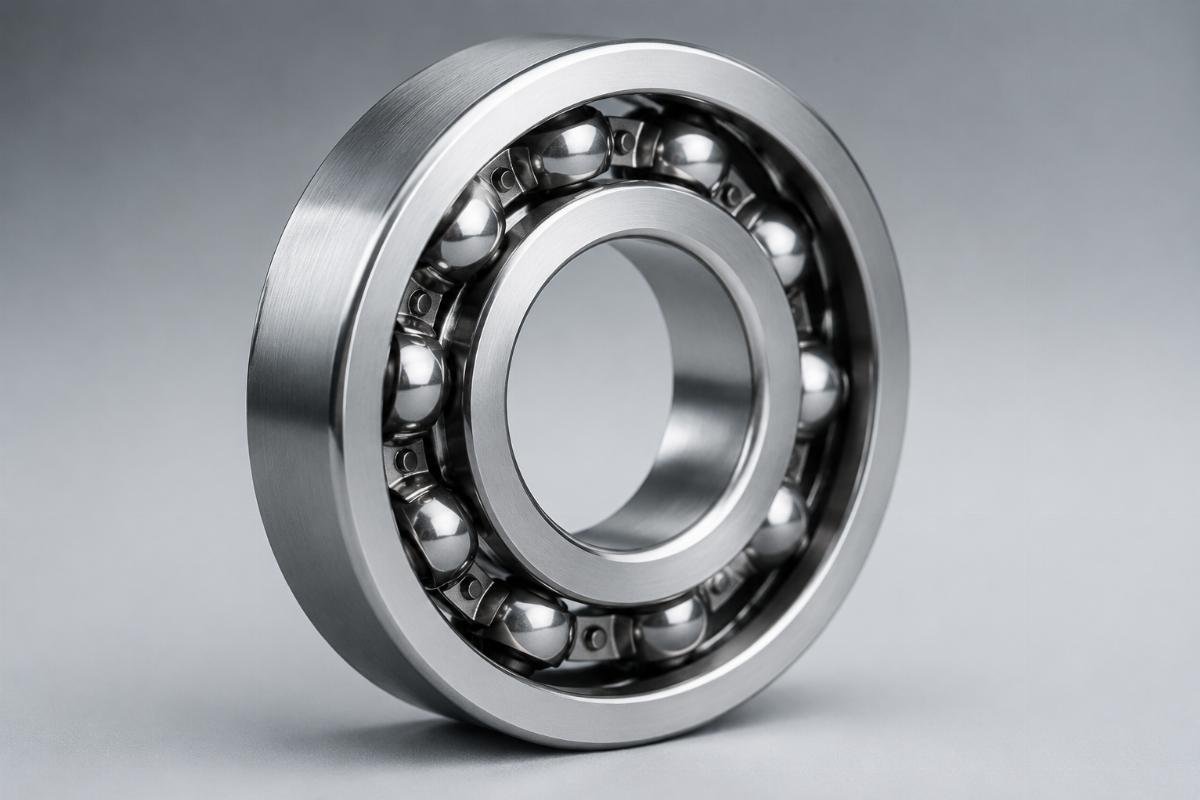
What follows is a working route through the Chinese market, from the questions to ask before the first quote to the checks that should be routine by the time the second container ships, so that what arrives is authentic and suits the application.
Why Does Buying Genuine Branded Bearings in China Call for Specialist Knowledge?
Counterfeit bearings cost industrial plants about $24 billion a year in downtime and repairs. In China, where fakes are reckoned to take 15-20% of trade, the exposure is concrete: compared with genuine branded product, counterfeit units run roughly 3x the failure rate in heavy machinery and last about 47% fewer operating hours. Meeting that threat requires suppliers with real quality systems and engineers who understand the application.
| Metric | Industry Reality |
|---|---|
| Counterfeit Market Share | 15-20% of industrial bearings in China |
| Failure Rate Comparison | Counterfeit bearings show 3x higher failure rate in heavy machinery applications |
| Lifespan Reduction | Average 47% shorter operational life compared to genuine SKF bearings |
| Downtime Cost | Unplanned downtime from counterfeit failures averages $12,000 per hour for manufacturing plants |
A European distributor of mining equipment components cut counterfeit-related returns by 92% after moving to a traceable supply chain. Its previous supplier issued generic certificates. What replaced them were lot-specific documents with the brand owner's official verification QR codes, so end users could authenticate a unit before installing it. Failure-related downtime dropped out of the returns picture, and the distributor's reputation for reliability improved with it.
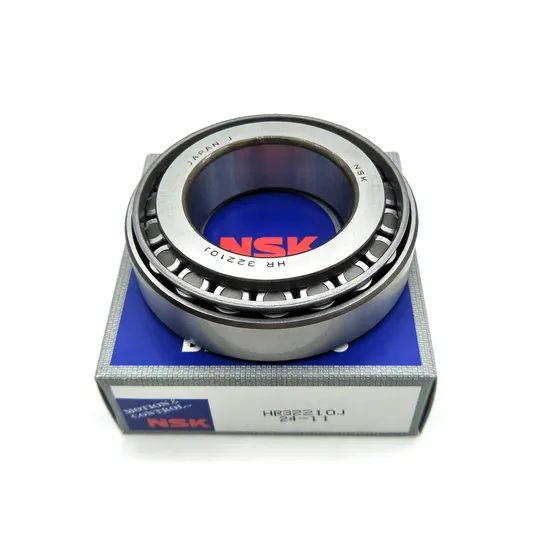
- Certification check — confirm the supplier's ISO 9001 and IATF 16949 certificates are current and that the scope actually covers bearing distribution and quality management.
- Traceability system — ask for sample batch documents that link a physical unit back to the brand owner's original manufacturing records.
- Physical inspection protocol — settle your acceptance criteria for holograms, laser marking and dimensional accuracy before the first order goes out.
- Supplier audit — visit the warehouse and look at storage conditions and the quality process with your own eyes.
- Failure analysis support — establish that the supplier produces technical reports on returned products instead of just replacing them.
Which Methods Actually Confirm That a Branded Bearing Is Authentic?
Certificates on their own will not stop a sophisticated counterfeit. ISO certification is a necessary floor, but authenticating a branded bearing takes several layers working together, including paperwork review, hands-on inspection, and a qualification process that looks well past the surface.
| Verification Dimension | Common Mistake | Correct Approach |
|---|---|---|
| Document Review | Accepting generic "certificates of authenticity" without batch specifics | Requesting manufacturing batch codes, material test reports, and SKF’s official verification via their online portal |
| Physical Inspection | Checking only external packaging and markings | Conducting dimensional measurements (tolerance within ±0.005mm for critical applications) and verifying laser-etched part numbers against SKF’s database |
| Supplier Qualification | Relying solely on Alibaba ratings or price quotes | Auditing supplier warehousing for proper storage conditions (temperature-controlled for precision bearings) and reviewing OEM partnership history with SKF |
A mining company in Australia narrowly avoided a bad outcome when our traceability checks flagged inconsistencies in a lot of 6308 deep-groove bearings. The supplier's paperwork carried the right batch numbers, but cross-referencing against the brand owner's official records showed a production date that could not have come from the plant claimed. Physical inspection then turned up small differences in cage design, which confirmed the units were counterfeit. Catching it before installation prevented what would otherwise have been a conveyor failure in the middle of peak production, with all the knock-on cost that implies.
- Batch code authentication — read the 10-digit code etched on the inner ring and match it to the brand owner's official database to confirm the production record.
- Material certificate review — read the heat treatment records and composition reports and compare them against the brand's specification.
- Laser marking analysis — measure depth, which runs 0.02-0.05mm, and check clarity; counterfeiters rarely reproduce either accurately.
- Packaging hologram — inspect the hologram for the color shift it should show as the viewing angle changes.
- Third-party testing — on high-value orders, have an independent lab check hardness and dimensional accuracy rather than trusting the file.
Which Factors Matter When You Compare Chinese Branded-Bearing Suppliers?
For industrial buyers, stock depth and technical support outweigh price. Cost still counts, but the suppliers worth keeping separate themselves on catalog coverage running past 10,000 SKUs, on engineering help that is tied to the application rather than the catalog, and on logistics flexible enough to keep downtime short.
| Supplier Type | Advantages | Ideal For |
|---|---|---|
| General Trading Companies | Lower prices for common models | Low-volume, non-critical applications with flexible lead times |
| Specialized Bearing Distributors | 10,000+ SKUs in stock, 72-hour standard delivery | MRO managers needing emergency replacements and technical support |
| OEM-Authorized Partners | Full traceability, custom manufacturing options | Wind energy and heavy industry requiring DNV certification and precision grades |
Coverage around 95% of the commonly used industrial models in this range is the benchmark worth asking about, against an industry average nearer 65%. That difference mattered to a European distributor serving SME automotive accounts who needed a wider range without raising inventory cost. Consolidated shipments and a 50-unit MOQ let them cut logistics spending by 18% while offering 30% more models to their own customers. What makes that possible is self-operated warehousing, the only way a supplier holds depth across a range that runs from deep-groove ball bearings through to spherical rollers.
- SKU coverage — check the supplier's inventory against your own critical list, including the sizes that are hard to find.
- Technical support — establish whether engineers who can run selection work, load calculations and failure analysis are genuinely on hand.
- Logistics flexibility — compare what is offered for emergency air freight, project deliveries in phases, and shipment consolidation.
- MOQ terms — ask what minimum applies to specialized units, particularly large-format or nonstandard models.
- After-sales — confirm that installation guidance and performance optimization advice come with the order.
What Does a Disciplined Sourcing Process Look Like, Step by Step?
A structured process removes most procurement risk. From the first inquiry through to support after delivery, following a defined protocol keeps the order aligned with what the application actually needs, and shrinks the chance that counterfeit or substandard goods ever reach your dock.
| Sourcing Stage | Critical Requirements |
|---|---|
| Initial Inquiry | Detailed model specifications (including clearance, sealing, and precision class), quantity, delivery timeline, and certification needs |
| Supplier Evaluation | ISO 9001/IATF 16949 certification, traceability documentation samples, and reference checks from similar industry clients |
| Sample Testing | Dimensional inspection, material certification review, and SKF official verification of at least 2-3 units from different batches |
| Order Placement | Clear terms for delivery timelines, quality guarantees, and documentation requirements (including material test reports) |
| Post-Delivery Support | Installation guidance failure analysis reports and replacement planning |
Product Inquiry
Need an NSK-series equivalent for your application?
Send the designation or the duty details and our team replies within one business day with pricing, lead time and the certificates that travel with the shipment.
About the Author
Engineering desk
Bearing application engineers · compatible replacement bearings for brand-series interchange
Our editorial team covers global sourcing, supplier verification and industrial component knowledge. Material is assembled from published manufacturer specifications, industry standards and direct work with international B2B buyers, and every article is reviewed before publication.
Need a quote for a specific bearing designation? Our engineers reply within one business day.
Request a quote