
ZZ vs 2RS vs Open Bearings: A Bearing Seal Selection Guide
Technical Snapshot
80k rpm
Maximum rated speed
≤32 dB
Noise class (Z1V1)
Z4V4
Precision class
A rubber-sealed 2RS unit is not automatically the tougher answer in a dirty plant. Maintenance managers tend to write 2RS the moment contamination enters the conversation, on the assumption that rubber lips beat metal every time. That blanket rule is precisely how bearings die early in hot or fast-running duty where a shielded ZZ variant would have kept going.
Closure choice belongs to the operating conditions, not to habit. Match ZZ, 2RS or open against the real duty—what the contaminant is, how hot the housing runs, how fast the shaft turns, and whether anyone can reach the bearing to relubricate it—and service life commonly improves by more than thirty percent while maintenance spending falls. Our work with industrial buyers in several regions keeps producing the same result: pairing the closure to the environment yields reliability and cost benefits you can measure, not estimate.
One call from a Brazilian steel mill has stayed with me. The purchasing agent there had ordered plain deep-groove ball bearings for a line that ran wet and dirty, and he could not have told you the difference between a 2RS rubber seal and a ZZ metal shield. What arrived were metal shields. Three months on, the units were packed with mill scale and the line was stopped. Since that call I ask three questions before confirming any closure selection: what the environment looks like, how fast the machine runs, and where the contamination comes from.
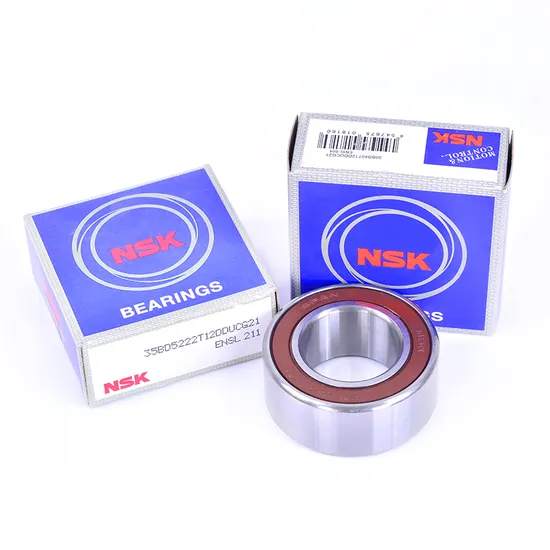
Understanding how each design is built, and how that construction behaves on a running machine, is what turns a purchasing decision into a reliability decision rather than a price comparison.
- How Do ZZ, 2RS and Open Seals Differ in Construction?
- How Do You Match a Closure to Real Operating Conditions?
- What Do Field Cases Show About Downtime and Seal Choice?
- Conclusion
What Separates ZZ, 2RS and Open Seals Physically?
Construction sets the protection ceiling, the speed ceiling and the temperature ceiling of every closure design. These are the parts buyers skim past during specification, yet they decide how well a bearing keeps grit out, keeps grease in, and survives the duty it was ordered for. Three configurations dominate: ZZ with steel shields, 2RS with rubber lips, and open units with no closure at all, and each one wins somewhere different.
| Characteristic | ZZ Metal Shield | 2RS Rubber Seal | Open Type |
|---|---|---|---|
| Construction | Non-contact metal shield attached to outer ring | Contact rubber seal with spring-loaded lip | No sealing components |
| Protection Level | IP64 (dust tight, water splashing resistant) | IP66 (dust tight, high pressure water jet resistant) | IP00 (no protection) |
| Temperature Range | -40°C to 200°C | -30°C to 120°C (NBR); up to 200°C (FKM) | -40°C to 200°C (dependent on lubricant) |
| Maximum Speed | 90% of open bearing speed | 60-80% of open bearing speed | 100% (unrestricted) |
| Initial Cost | Moderate | Highest | Lowest |
| Maintenance Requirement | Low | Very low | High (frequent relubrication needed) |
| Typical Service Life | Substantially extended vs open in clean environments | Noticeably extended vs open in contaminated environments | Shortest (susceptible to contamination) |
The protection ratings quoted above follow the logic of ISO 15242, which groups seal designs by the level of ingress protection they provide rather than by appearance.
Lubricant handling separates the designs more sharply than the marketing does. A ZZ shield forms a labyrinth path that holds grease while permitting a slow, controlled migration, which suits equipment that must run long intervals untouched but does not need a hermetic barrier. A 2RS lip, spring-loaded against the inner ring, keeps lubricant in and contamination out almost completely, and charges friction for the privilege. Open bearings protect nothing and make relubrication and inspection easy in a clean, controlled system.
Seal compound matters as much as seal shape. Standard 2RS units use nitrile rubber, comfortable to 120°C. Above that, fluoroelastomer seals hold their properties to roughly 200°C. Fit nitrile into a service that runs hot and the lip hardens and cracks long before the bearing has used up its fatigue life.
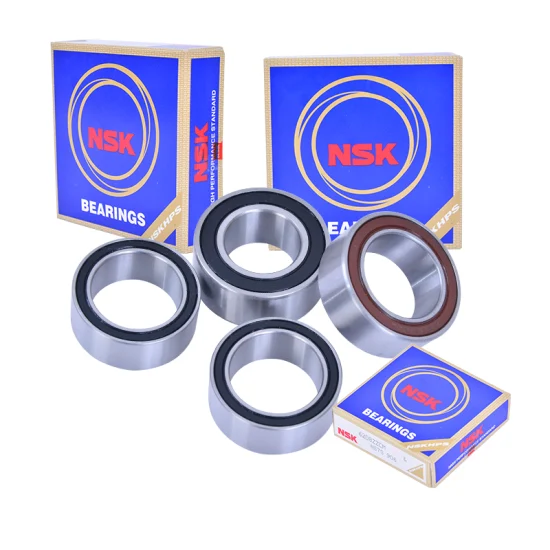
A few technical points deserve a place on the specification sheet:
- Seal compound — align the seal material with the temperature band: nitrile for standard duty, fluoroelastomer where the housing runs hot.
- Protection target — set the ingress level the position needs, using ISO 15242 groupings rather than guesswork.
- Speed derating — apply the speed factor that belongs to the closure when you calculate the maximum running rpm.
- Grease compatibility — confirm the lubricant will not attack the seal compound, particularly in elevated-temperature service.
- Whole-life costing — compare total cost of ownership, not the unit price, with maintenance and downtime included.
How Do You Match a Closure to Real Operating Conditions?
A structured assessment of temperature, contamination and speed is what keeps closure choice from becoming a guess. Deciding between ZZ, 2RS and open should rest on where the contaminant originates, how wide the temperature swing runs, how fast the shaft turns, and what the maintenance plan allows. Skip that analysis and you buy either premature failure or cost you did not need.
| Selection Factor | Common Mistake | Recommended Approach |
|---|---|---|
| Temperature | Assuming 2RS works for all high-temperature applications | Use ZZ for sustained temperatures above 120°C; specify FKM seals for 2RS when up to 200°C is required |
| Contamination Level | Over-specifying 2RS for clean environments | Use Open bearings in clean, well-lubricated systems; reserve 2RS for high-contamination areas |
| Rotational Speed | Ignoring speed limitations of contact seals | Calculate adjusted speed limits: ZZ (90% of open speed), 2RS (60-80% depending on temperature) |
| Maintenance Access | Selecting sealed bearings for inaccessible locations | Choose 2RS for minimal maintenance; ZZ for periodic inspection needs; Open for applications with regular maintenance schedules |
| Cost Consideration | Focusing solely on initial purchase price | Calculate total cost of ownership including installation, lubrication, replacement, and downtime costs |
Field experience puts the life extension available from correct closure matching at two to three times in contaminated duty, which is a far larger number than the price gap between the variants.
The same mismatch shows up again and again. A copper mine crusher was running standard 2RS sealed spherical rollers and losing them at a high rate, because the maintenance team equated more sealing with more protection. Water was never the problem. Fine abrasive dust was working past the lip every time the housing cycled through heat and cool, and the contact seal then held that grit against the raceway, wearing it faster. A labyrinth ZZ arrangement with external protection ended the failures.
Our stocked range covers sealed variants that most channels cannot put on a dock quickly, FKM 2RS designs included. When an order calls for a designation like 7215BECBP with fluoroelastomer seals, we can pull it from stock and dispatch inside 48 hours instead of quoting a factory lead time in weeks, and every unit travels with lot-level records. That difference matters when a line is down and hours have a price.
Run the application through this sequence before you commit to a closure:
- Environment audit — map particulate, moisture and chemical exposure at the bearing position before choosing anything.
- Temperature profile — log ambient and operating readings during normal production, not only at start-up.
- Speed and duty cycle — establish peak rpm and how long the machine holds it, then apply the closure's speed factor.
- Maintenance access — check planned intervals and how hard the housing is to reach, since that decides whether relubrication is realistic.
- Failure history — review what has actually failed before and whether contamination, lubrication or heat dominated.
The sequence above follows the selection methodology laid out in the relevant ISO standards for industrial rolling bearings, adapted to the shop-floor data most plants actually hold.
How Much Downtime Does Correct Seal Selection Actually Save?
The case evidence is not theoretical. Tailored sealing pays back through longer service intervals and fewer unplanned stops, and three sector examples show how matching the closure to the duty resolved chronic reliability trouble. Different industries, one common origin: the original closure was chosen without reference to the environment.
Continuous caster, steel mill in Southeast Asia
A steel plant in Southeast Asia was fighting repeated failures on its continuous caster line. Maintenance had standardized on open 6312 deep-groove bearings, which had to be replaced every three months because cooling water and iron oxide scale kept getting in. The result was an average of eight hours of unplanned downtime every month.
We looked at the duty: about 85°C, heavy moisture, and a lot of particulate. The recommendation was a move to 2RS sealed units, whose rubber lips shut out the water and scale that had been killing the open bearings. Life jumped immediately to nine months, annual replacement cost fell substantially, and the production interruptions stopped.
Across contaminated industrial duty, properly matched closures routinely deliver two to three times the service life of open units in the same position.
Wind turbine gearbox
A wind operator was finding internal corrosion in gearbox bearings that had been specified as ZZ 7215BECBP angular contact units, on the assumption that metal shields would be protection enough. Condensation forming as the nacelle cycled through temperature swings was the actual mechanism, and shields cannot stop water vapor.
The answer was a modified 2RS build with FKM seals. Fluoroelastomer kept the lip sealing across the wide temperature range a turbine sees, corrosion incidents dropped to zero, and the installation met the requirements of IEC 61400-25. Uptime across the following certification cycle came in close to perfect.
Compliance with IEC 61400-25 for wind turbine bearing systems shaped the closure specification in that case, not the other way round.
Copper mine crusher
A copper operation was losing standard 2RS sealed spherical rollers, 22324CA, at a high rate in crusher service. Maintenance assumed rubber seals would cope with the dust. In practice, fine abrasive particles were migrating through the seal interface every time the housing expanded and contracted.
The concept was not wrong; the closure type was wrong for that particular ingress path. The fix was a staged arrangement: external labyrinth seals protecting the bearing, with ZZ shields retaining lubricant and still allowing the housing to breathe thermally. Failure frequency dropped sharply and service intervals stretched out considerably.
Multi-stage sealing is the standard answer where contamination is severe enough that no single closure can handle it on its own.
The pattern across all three is simple: there is no universally best closure, only the right one for a given duty. The costliest seal available buys nothing when it fights the environment, and the simplest design performs remarkably when the match is correct.
Conclusion
Choosing a closure from the actual operating conditions, instead of from habit, delivers measurable gains in reliability and in total cost of ownership. ZZ shields for sustained heat, 2RS rubber seals for contaminated positions, open designs for clean systems on a regular maintenance route—the discipline is the same in every case: assess temperature, contaminant, speed and access. Get that match right and bearing life lengthens, unplanned stops fall, and maintenance budgets stop leaking.
Product Inquiry
Need an NSK-series equivalent for your application?
Send the designation or the duty details and our team replies within one business day with pricing, lead time and the certificates that travel with the shipment.
About the Author
Engineering desk
Bearing application engineers · compatible replacement bearings for brand-series interchange
Our editorial team covers global sourcing, supplier verification and industrial component knowledge. Material is assembled from published manufacturer specifications, industry standards and direct work with international B2B buyers, and every article is reviewed before publication.
Need a quote for a specific bearing designation? Our engineers reply within one business day.
Request a quote